





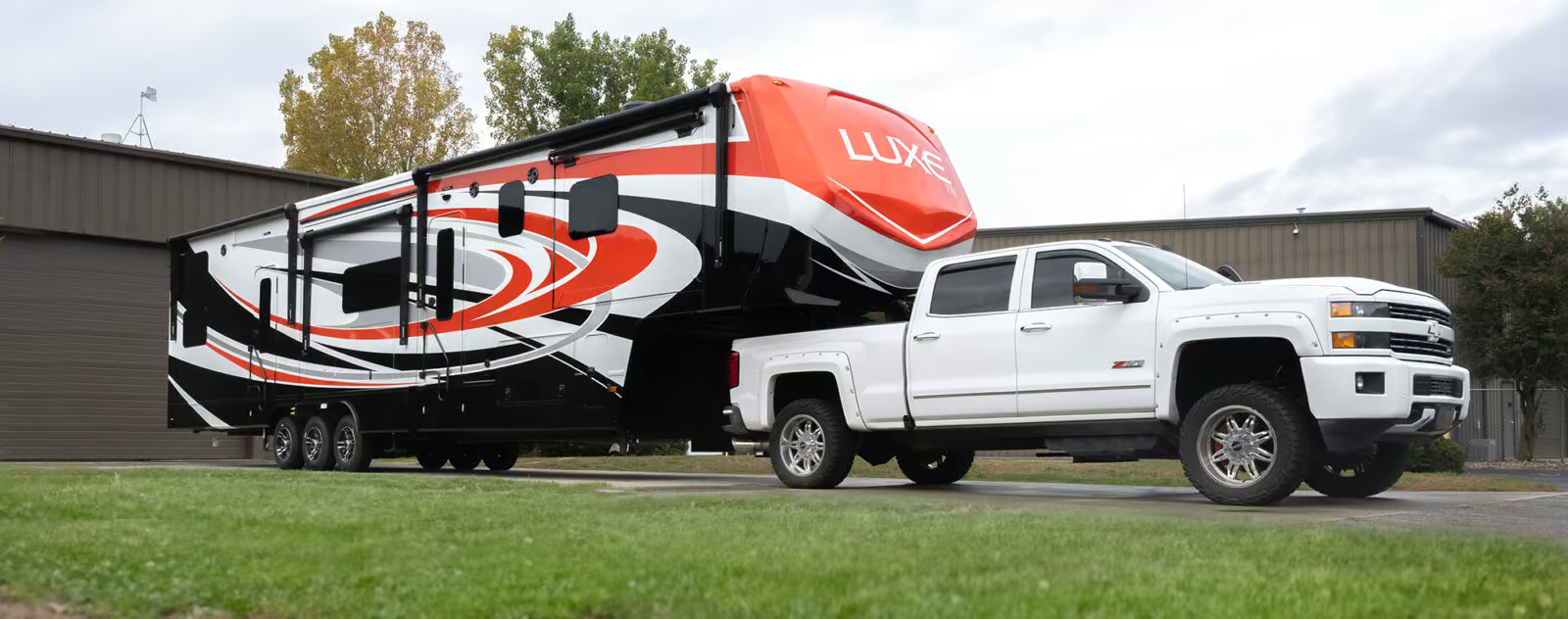
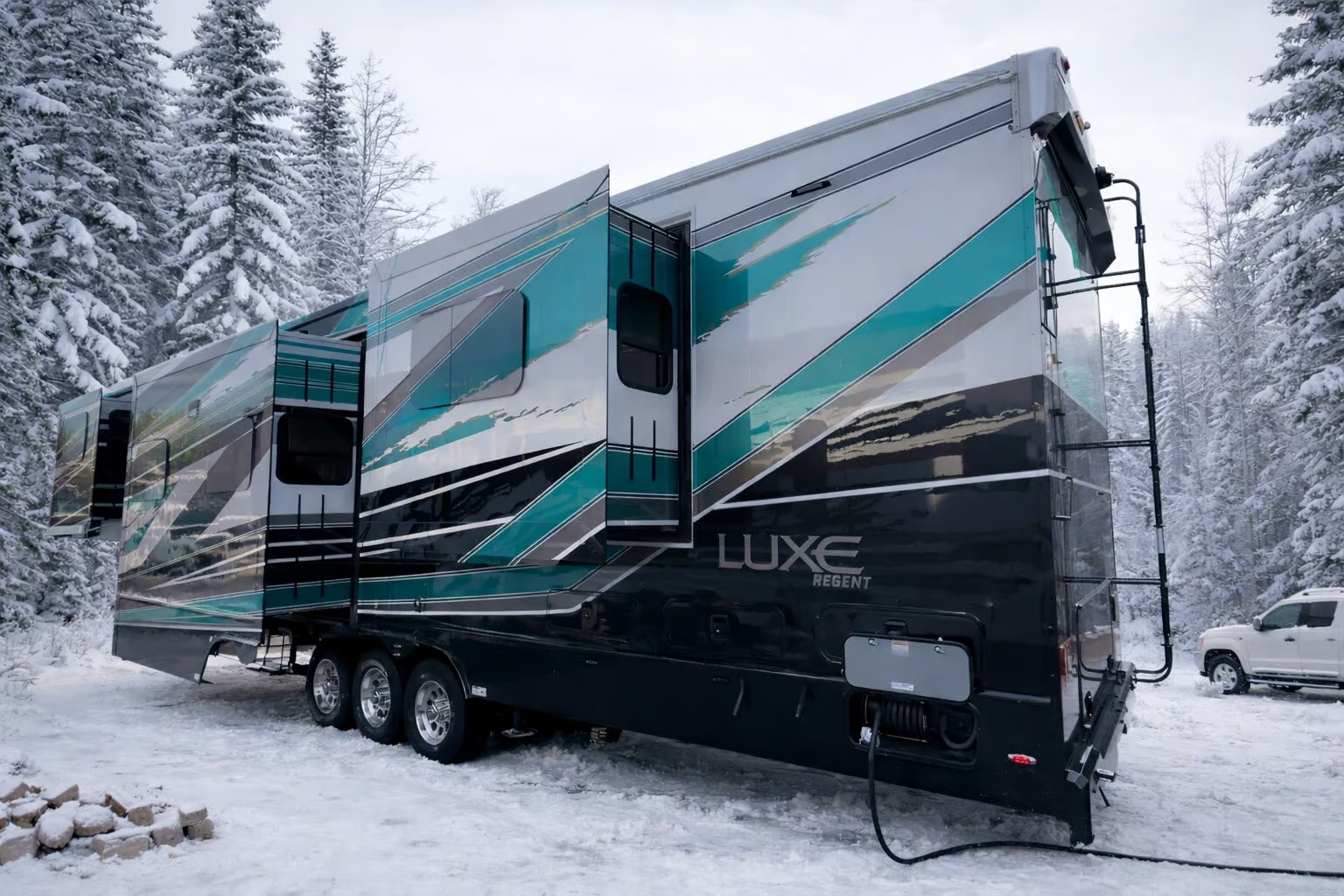
Forget winterizing. True freedom is having the confidence to take your luxury home anywhere, anytime—from the scorching desert to the frozen tundra.
You’ve logged the miles. You’ve mastered the art of towing, you know your way around a pedestal, and you’ve traded the weekend warrior mindset for the extended-stay lifestyle. But for many experienced RVers, there is still one final frontier: true, unrestricted, year-round camping.
Most RVers operate on a seasonal clock. When the leaves turn, they turn south. When May arrives, they head north. But what if you want to ski in Colorado in January without staying in a hotel? What if you want to visit family in Minnesota for Thanksgiving without freezing your tanks?
Transitioning to four-season camping requires a shift in mindset and, crucially, a massive upgrade in equipment. “Standard” builds simply won’t cut it when the mercury drops below twenty degrees.
This guide is for the seasoned traveler ready to embrace the “no off-season” lifestyle without sacrificing residential comfort.
Defining the Mechanics of Four-Season Camping
Before we discuss strategy, we need to define the tactical vocabulary of all-weather RVing. Many manufacturers slap an “Arctic Package” sticker on a rig and call it a day. Experienced RVers know that sticker is often meaningless. Here is what actually matters:
- True R-Value (Thermal Resistance)
In residential construction, R-value measures how well insulation resists heat flow. In RVs, it’s the difference between a cozy living room and seeing your breath indoors. You need high R-values not just in the roof, but in the walls and, critically, the floor.
- The Standard: Many generic fifth wheels have R-9 walls.
- The Requirement: For severe cold, you want residential-grade insulation—think R-20+ roofs and R-11+ walls using closed-cell foam or high-density fiberglass, not loosely packed batting that settles over time.
- The Monolithic vs. Hung Wall
How the walls are built determines drafts.
- Hung Walls: Like a stick-built house, insulation is stuffed between studs. This creates “thermal bridging,” where cold transfers through the aluminum studs right into your living space.
- Monolithic (Laminated) Walls: The exterior fiberglass, insulation (usually solid foam), and interior wallboard are vacuum-bonded into a single, solid piece. This is vastly superior for structural integrity and insulation.
- The Enclosed and Conditioned Underbelly
Your tanks and water lines live downstairs. If they are exposed to the elements, your trip ends at 32°F.
A true four-season rig has an underbelly sealed with corrugated plastic or fiberglass liner. Crucially, it must be conditioned—meaning a furnace duct actively blows hot air into this sub-floor space to keep plumbing liquid.
- Dual Pane Windows (Thermal vs. Frameless)
Single-pane windows are massive holes in your insulation envelope. You need dual panes. But beware: many sleek-looking “frameless” dual pane windows offer minimal air gaps and poor thermal performance. You want robust, framed thermal-pane windows that act like residential glass.
Real-World Scenarios: The Four-Season Reality
Having the right gear is half the battle; knowing how to use it is the other half.
Scenario A: The Deep Freeze (Winter in Idaho, -10°F)
You are parked near a ski resort. It’s a stunning winter wonderland outside, and it is brutal.
- The Challenge: Keeping water flowing and propane running.
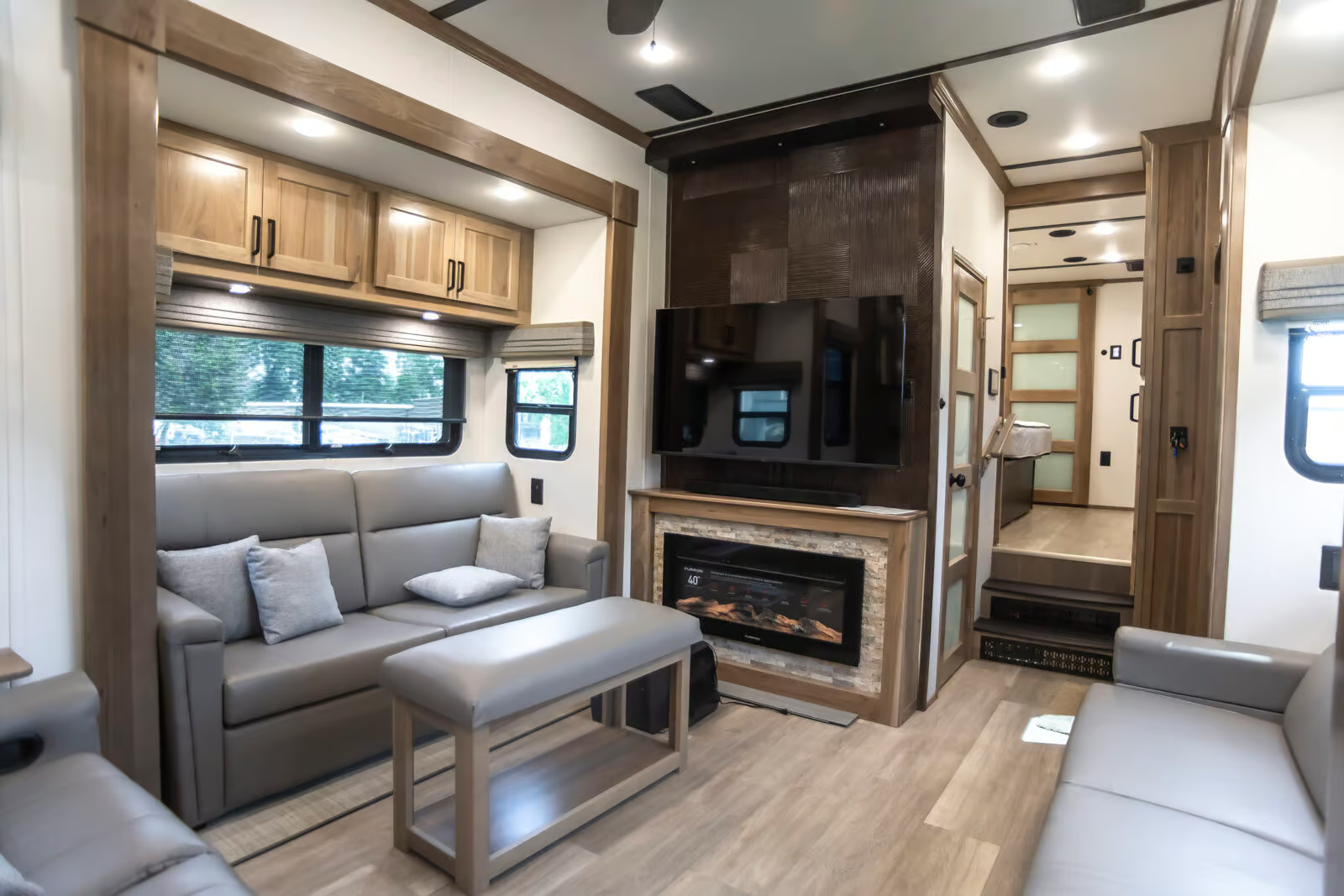
- The Experienced Move: You aren’t relying solely on the RV’s furnace. You are supplementing with electric fireplaces or ceramic heaters to save propane (if on shore power). You have a heated water supply hose connected to the spigot. You keep your sewer hose disconnected until dumping day so wastewater doesn’t freeze in the slinky. You trust your rig’s insulation to hold the heat produced by your furnace, which is simultaneously keeping your basement pipes warm.
Scenario B: The Desert Oven (Summer in Moab, 105°F)
Four-season camping isn’t just about cold; it’s about extreme heat. A poorly insulated rig turns into a microwave in the Utah sun.
- The Challenge: Cooling down a large volume of space and fighting solar gain.
- The Experienced Move: You need convection cooling. A single 15k BTU A/C unit is useless here. You need two, preferably three, high-efficiency ducted A/C units working in tandem. You have reflective shades drawn on the sunny side. Because your rig has thick, insulated walls, the cool air stays inside once the temperature is brought down.
Scenario C: The Shoulder Season Swing (Autumn in the Smokies)
This is the trickiest weather. It’s 70°F and sunny at 2 PM, but drops to 28°F at 4 AM.
- The Challenge: Managing massive temperature swings and condensation.
- The Experienced Move: When warm daytime air meets cold surfaces at night, walls sweat. In a standard RV, you wake up to wet walls behind the sofa. In a luxury four-season rig, the superior wall insulation prevents the interior wall surface from getting cold enough to reach the dew point. You run a small dehumidifier to manage moisture from cooking and showering, ensuring a dry, comfortable morning.
The Solution: Why Luxe Fifth Wheel Meets the Challenge
If you are serious about this lifestyle, you quickly realize that the mass-produced brands on typical dealership lots are not built for the scenarios above. They are built for vacationers, not full-timers facing the elements.
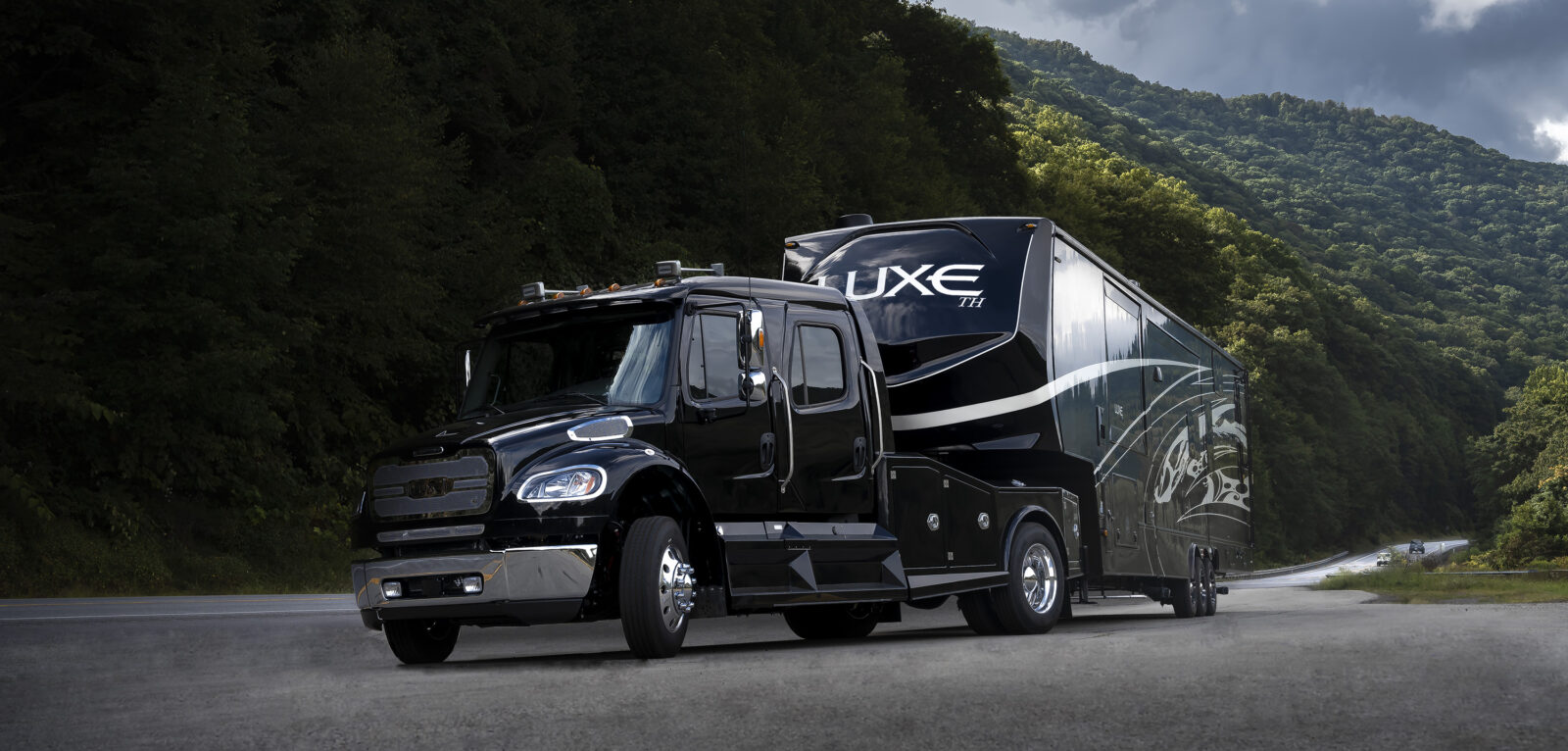
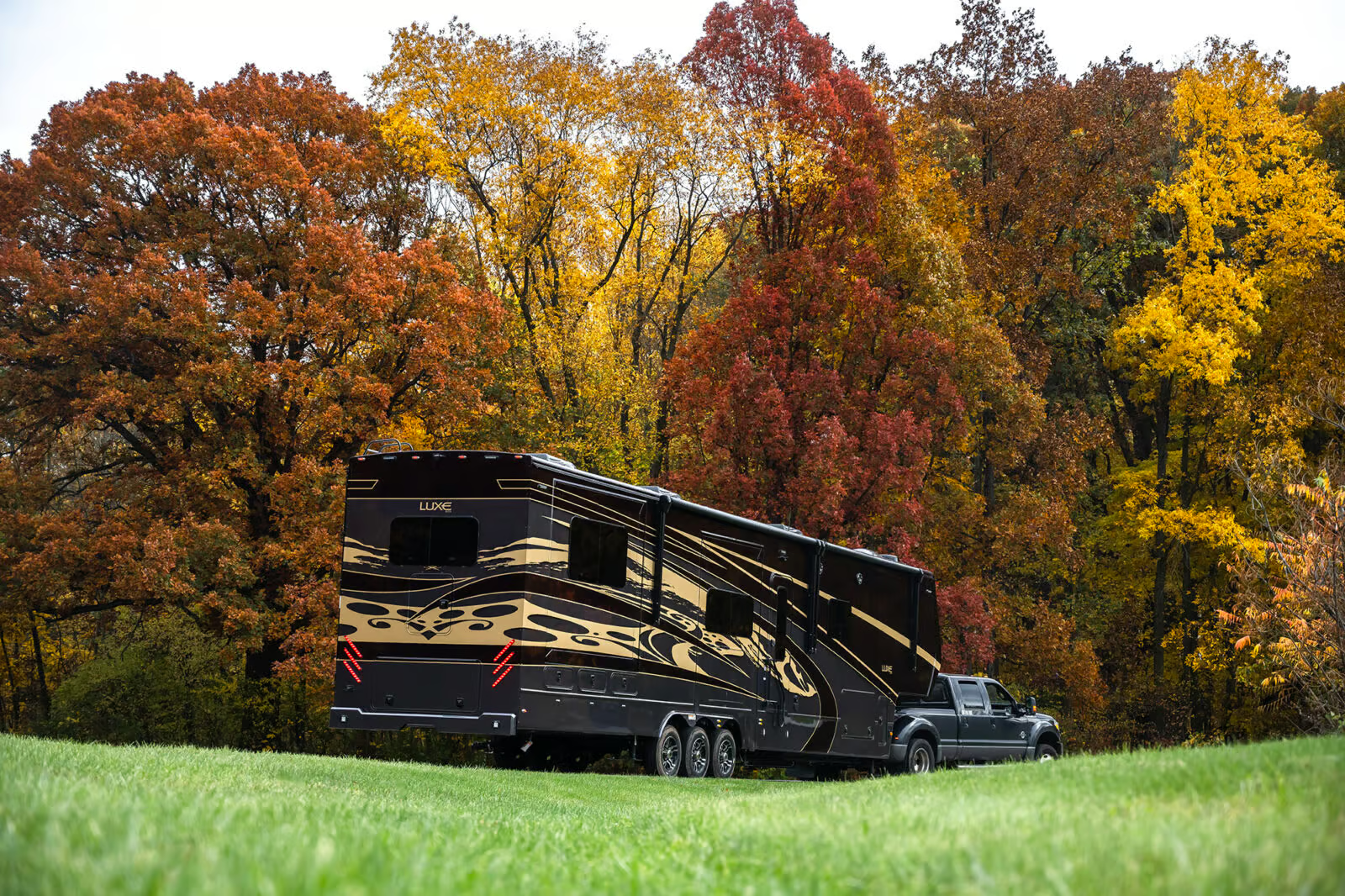
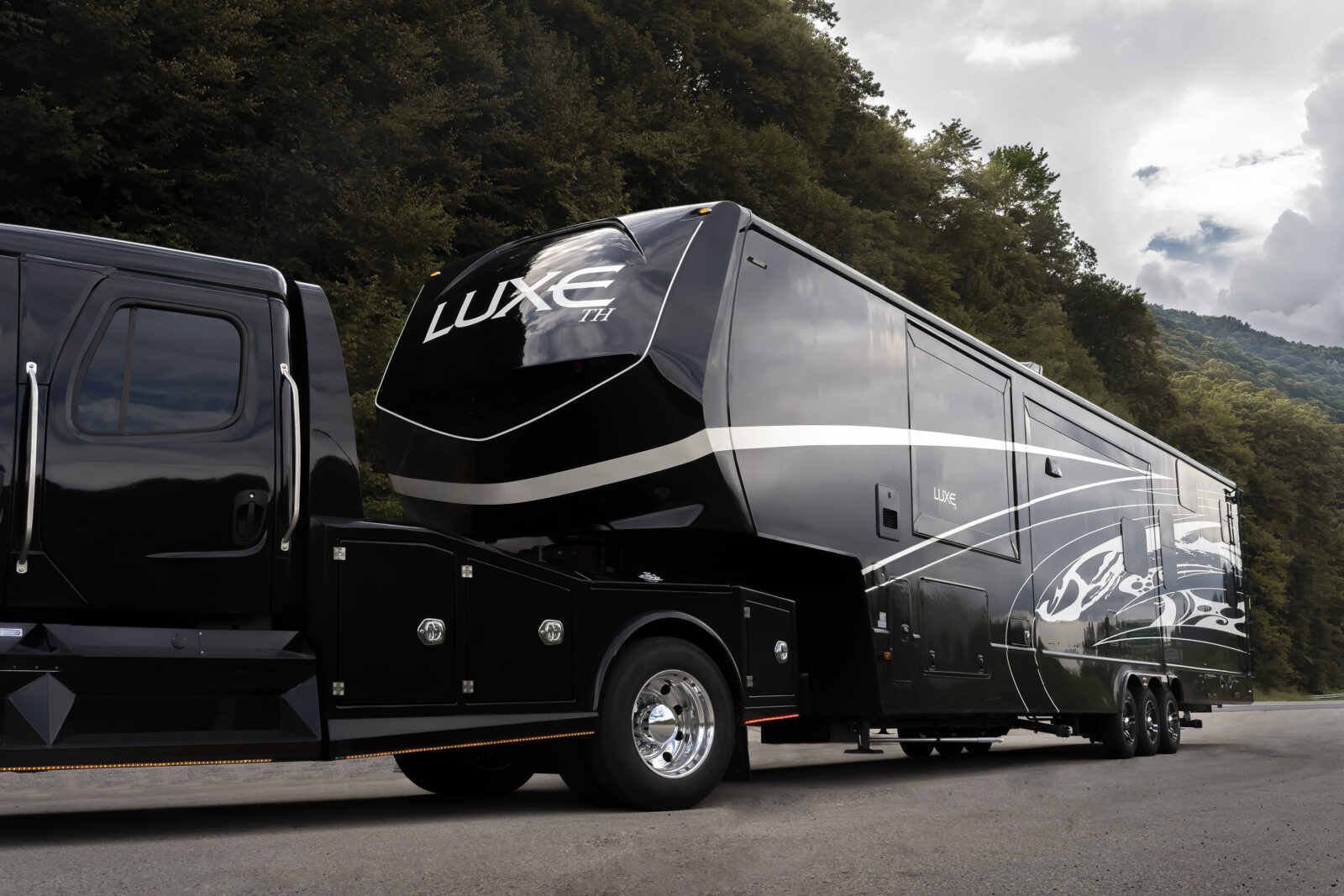
This is where Luxe Fifth Wheel (Luxefifthwheel.com) operates in a class of its own. They don’t just meet the requirements for four-season living; they define them.
When you look at a Luxe through the lens of an experienced year-round camper, the differences are stark:
- Unrivaled Insulation: Luxe uses a 3-inch thick monolithic laminated wall. That is significantly thicker than the industry standard, providing structural rigidity and genuine residential-grade insulation that eliminates thermal bridging.
- Tested Zero-Degree Performance: They don’t just guess; they test. Luxe rigs are climate chamber tested to maintain comfortable interior temperatures even at 0°F and below.
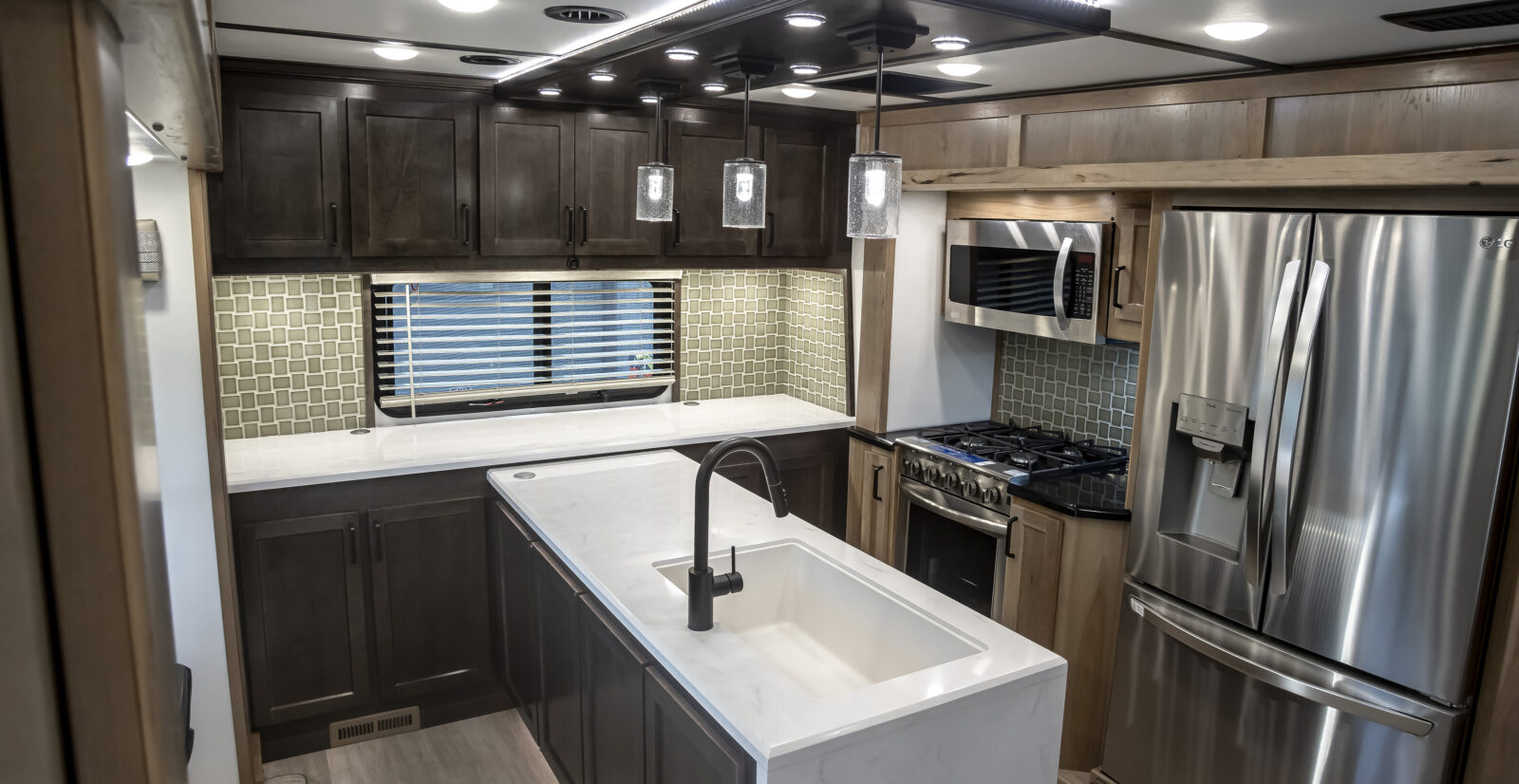
- True Residential Build: From dual-pane windows that actually work to a robust, forced-air heating system that prioritizes the underbelly, every component is selected for longevity and performance in extreme weather. They use residential-style ducted A/C systems that are quieter and far more efficient than standard RV units.
- Factory Direct Accountability: Luxe doesn’t sell through dealers. When you buy a Luxe, you are dealing with the people who engineered it for the very conditions you plan to face. You can customize your rig based on whether you’ll spend more time in the Yukon or the Yucatan.
For the experienced RVer who wants luxury without geographical or seasonal limits, Luxe provides the essential hardware to make it a reality.
FAQ: Four-Season Luxury Camping
Q: Do I really need RV skirting if I have a luxury four-season rig?
A: In a true luxury rig like a Luxe, you often don’t need skirting for moderately cold weather (down to single digits) because the heated underbelly and insulation are so efficient. However, if you are stationary for a month in -20°F winds, skirting helps reduce propane consumption by stopping wind chill underneath the rig. It moves from a necessity to an efficiency upgrade.
Q: How do I manage the massive propane usage in winter?
A: First, a better-insulated rig uses significantly less propane. Second, utilize campground electricity. Use your electric fireplace and supplemental safe space heaters for the living area, setting the propane furnace thermostat lower just to keep the basement heated. Always have an external 100lb propane tank rented from a local supplier for long winter stays so you aren’t refilling 30lb tanks every three days.
Q: Won’t my slide-outs freeze?
A: This is the weak point of any RV. Snow and ice can accumulate on slide toppers or seals. A true four-season rig has better insulated slide-out floors and superior wiper seals. The pro tip is to clear heavy snow off slide toppers before retracting them and spray seals with conditioner so they don’t stick to the slide walls in freezing temps.
Q: Is a “Residential Refrigerator” safe in a slide-out during freezing weather?
A: In cheaper RVs, the water line to the fridge ice maker often freezes because it runs under a poorly insulated slide. In high-end units designed for year-round use, this line is better routed and insulated. If extreme cold is forecast, some owners choose to winterize just that specific line for peace of mind.